Content Creation
Influencer Marketing
September 3, 2026
Influencer Campaign Timeline: What Actually Happens?
Discover what an influencer campaign timeline involves, from strategy and creator selection to launch and reporting.

Discover what an influencer campaign timeline involves, from strategy and creator selection to launch and reporting.
From the outside, influencer marketing can look wonderfully simple. A product arrives. A creator films something clever. The post goes live. Everyone enjoys the comments section. Behind the scenes though? There’s slightly more involved.
Strong campaigns move through strategy, creative development, creator selection, contracts, production, approvals, launch and reporting. That’s more coordination than the final 30-second TikTok lets on.
This process doesn’t need to become painfully corporate though – it just needs a realistic timeline, clear decisions and enough freedom for creators to make content people actually want to watch.
So, what really happens between the first campaign conversation and the final report? Here’s the influencer marketing workflow, minus the mystery.
Most influencer campaigns need around eight to twelve weeks from initial planning to launch and reporting. A smaller activation with one creator and a straightforward brief may move faster. A multi-platform launch involving several creators, product delivery, paid usage and legal approval will usually need longer.
The key word here is around. The number of creators, platforms, deliverables, approval rounds and commercial requirements all affect the schedule. The live campaign may last days; but the work behind it starts much earlier.
No two influencer branded campaigns run exactly alike, but this gives brands a realistic starting point:
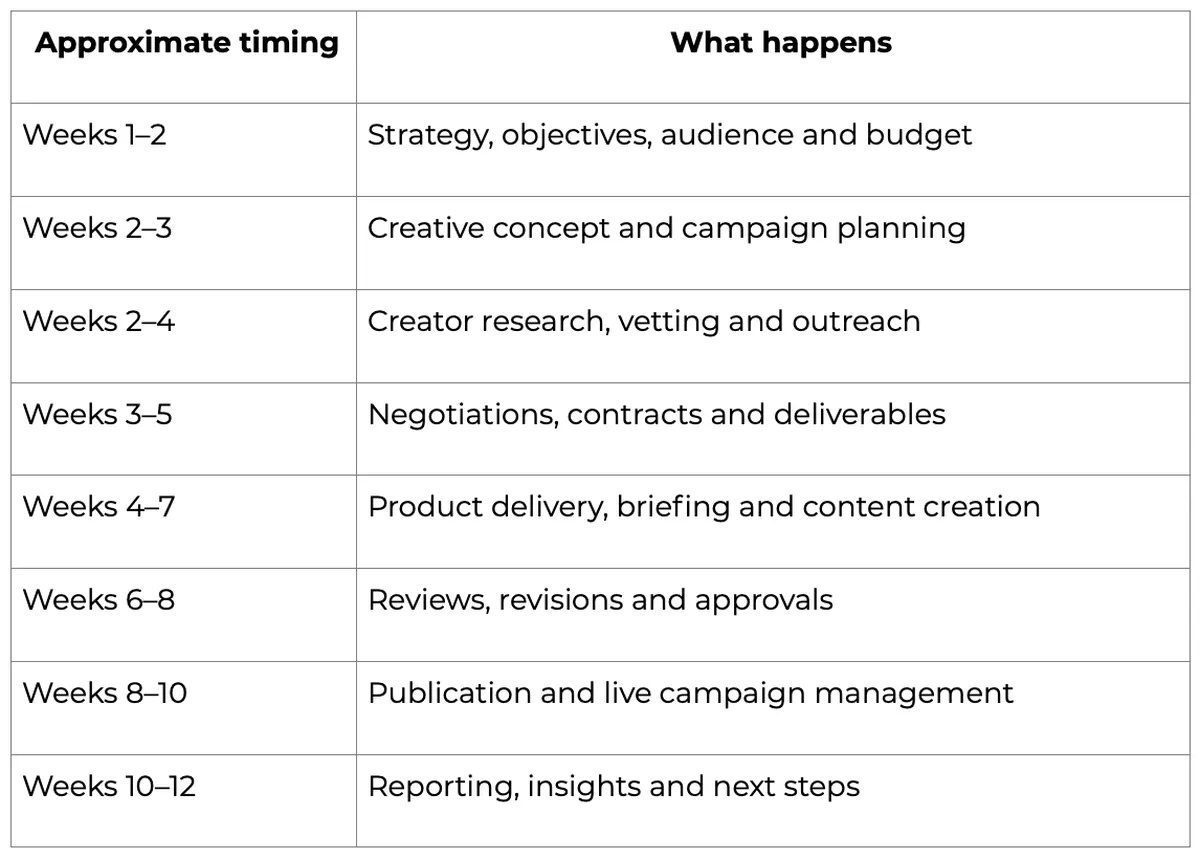
Stages often overlap: outreach may begin while the concept is refined, and production can start as individual contracts are signed.
The timeline should always aim to flex around the campaign. After all, a one-off gifting activation doesn’t need the same plan as a ten-creator launch with paid media across three markets.
Before anything else, define the strategy. That means agreeing what the campaign needs to achieve, who it needs to reach and how success will be measured.
Are you trying to build awareness, shift perception, drive traffic, generate leads or create content for paid social? Pick the priority early, because it shapes the creators, platforms, formats, timings and budget that follow.
Next, the commercial goal needs to become an idea people want to watch. A strong concept gives the campaign a clear creative direction while leaving space for each creator’s style. It should define the core message, desired audience response and any essential campaign moments without scripting every pause, camera angle and facial expression.
Balance matters. Too little direction and the campaign can feel disconnected. Too much control and the content starts feeling like an advert wearing a trench coat.
The best concepts can travel across different creators while still feeling native on each channel. A TikTok, Reel and YouTube integration should belong to the same campaign without looking copied and pasted.
What if we told you the best creator for your campaign isn’t the one with the most followers?
Instead of follower count, creators should be assessed against the campaign objective and audience. That includes their content style, audience demographics, engagement quality, platform performance, previous partnerships, reputation and ability to communicate the product naturally.
The right mix may include large creators for scale, smaller creators for niche relevance or both. What matters is the role each person plays.
Vetting goes beyond the visible metrics. Reliability, creative consistency and commercial experience matter once the campaign starts moving. Established talent relationships add context no public profile will show.
This is where relevance beats reach. Every time.
Once the shortlist is agreed, the conversations begin. Outreach confirms interest, availability and whether the partnership genuinely fits the creator. Negotiations then cover fees, deliverables, production requirements, publication dates, usage rights, exclusivity and any paid amplification.
One “post” may involve cut-down edits, raw footage, paid use or restrictions on competitor work, with every addition affecting scope, timing and cost.
Clear contracts protect both sides by putting those details in writing before production begins. They should also cover advertising disclosure, approvals, cancellations and what happens if a launch date changes.
In the UK, influencer content must be clearly identifiable as advertising where there is a commercial relationship, so disclosure requirements should be agreed before content goes live.
With the commercial details signed off, creators receive the campaign brief and begin developing their content.
A useful brief includes the objective, audience, key message and information, deliverables, platform requirements, deadlines, disclosure guidance and approval process. It should explain what the brand needs without telling the creator how to be themselves.
Creators then develop concepts, film, edit and prepare supporting assets. A simple short-form video may move quickly; location shoots, events and longer-form content need more space.
Physical products add another moving part: delivery. Build shipping and replacement time into the campaign timeline rather than assuming every parcel will arrive promptly and photogenically.
Before anything goes live, the content needs to be checked against the agreed brief.
Reviews may involve the brand, agency and legal or compliance teams. They cover factual accuracy, required messaging, disclosures, links, tags and any regulated claims, while also making sure the content still feels natural to the creator.
The quickest process has one decision-maker, agreed response times and consolidated feedback. The slowest has six people commenting separately and one late arrival asking if it can feel “more premium”.
Feedback should be specific and connected to the brief. Necessary corrections matter. Endless subjective tweaks can flatten the content, frustrate the creator and push the publication date backwards. Approvals should protect the campaign, not edit all the life out of it.
Publication is the most visible stage, but campaign management does not stop when the post appears.
The team checks that content is live at the right time with the correct caption, links, tags and disclosures. It also tracks deliverables, monitors early responses and handles any problems quickly.
Some campaigns launch in one burst. Others stagger content to extend visibility and learn from early performance. The right approach depends on the objective, platform and audience.
Where agreed, strong creator assets can also support paid social, brand-owned channels, landing pages or email activity. This is why usage rights need to be settled earlier rather than requested enthusiastically after the content starts performing.
Reporting connects campaign performance back to the original objective.
Metrics may include reach, views, watch time, engagement, clicks, conversions, sales or sentiment. The useful report is not the one with the most numbers. It explains what they mean.
Which creators connected most strongly with the target audience? Which hooks kept people watching? Which formats encouraged action? Where did the campaign lose momentum?
Those answers help shape the next campaign: who to work with again, what to test, where to invest and which creative ideas deserve another outing.
A good campaign report closes the loop, while a great one makes the next brief even better.
Campaign delays are rarely caused by one enormous disaster. More often, several small decisions arrive late and form an irritating little queue.
Common causes include:
Most risks can be managed early. Build contingency around product delivery, contracts and approvals.
A realistic brand campaign timeline is not pessimistic. It is much cheaper than a panicked one.
The easiest way to protect the timeline is to make important decisions before creator outreach begins.
Start with a confirmed objective, audience, budget and launch window. Flag any immovable dates immediately. Agree who can approve the creative, how quickly feedback will be returned and which teams need visibility.
It also helps to:
Treat creators as creative partners, not interchangeable media space. They have audiences, working styles and schedules of their own.
At Connect Agency, influencer campaign management covers the full journey from first idea to final insight.
We define the strategy, shape the creative, identify and vet creators, manage outreach and negotiations, coordinate contracts and briefs, oversee approvals, support publication and report on performance.
Our job is to keep the process organised without squeezing the personality out of the work. The result is creator-led work built around the right audience, platform and commercial goal – not a branded script delivered by someone with followers.
Explore our work to see what that looks like in the wild.
A realistic influencer campaign timeline gives brands more room to make smart decisions, creators more room to do strong work and everyone less reason to panic in a shared document at 4:57pm.
Planning an influencer campaign? Tell Connect Agency what you want to achieve, who you need to reach and when you hope to launch. We’ll build the strategy, the team and the timeline to make it all happen.
5.0 from 21 reviews
From managing talent and crafting game-changing creator strategies to producing scroll-stopping content, we offer end-to-end influencer marketing services UK brands trust.